
Attachment Informed PsychotherapyDaniel Sonkin, Ph.D. http://www.danielsonkin.com/ Thank you for your payment. Your transaction has been completed, and a receipt for your purchase has been emailed to you. You may log into your account at www.paypal.com/us to view details of this transaction. To complete this class just read the material below, email me any questions you might have, and complete the quiz/evaluation (link below). Once I receive notification of your completion, I will send you an email with a link to your certificate of completion. I hope you find this class both interesting and helpful to your clinical practice. Bookmark this page for further reference. Goals of Class
To ask me questions as you read the material, contact me at: contact@danielsonkin.com Rationale for Attachment Theory
Who is an attachment figure?
Bowlby’s central proposition… ….that beginning in early infancy, an innate component of the human mind -- called the “attachment behavioral system” -- in effect asks the question: Is there an attachment figure sufficiently near, attentive and responsive? If the answer is yes….. …then certain emotions and behaviors are triggered, such as playfulness, less inhibited, visibly happier and more interested in exploration. The "Strange Situation" is a laboratory procedure used to assess infant/parent attachment status. The procedure consists of eight episodes of separation and reunion (Ainsworth, Blehar, Waters, and Wall, 1978). The infant's behavior upon the parent's return is the basis for classifying the infant into one of three attachment categories. In the Strange Situation, secure infants are distressed when the parent leaves the room. When the parent returns, these infants are distressed (protest) but will quickly settle down and return to playing and exploration. If the answer is consistently no… …a hierarchy of attachment behaviors develop due to increasing fear and anxiety (visual checking; signaling to re-establish contact, calling, pleading; moving to reestablish contact). If the set of attachment behaviors repeatedly fails to reduce anxiety (get the caregiver to respond appropriately) then the human mind seems capable of deactivating or suppressing its attachment system, at least to some extent, and defensively attain self reliance. This leads to detachment. In the strange situation, these infants seem to be not phased by the parent leaving and disinterested when the parent returns. But when their heart rate is measured, they are indeed quite anxious. These infants are classified as having an anxious-avoidant attachment to their attachment figure. If the answer is inconsistently no… …the attachment behaviors described previously become exaggerated as if intensity will get the attachment figure to respond (which may or may not work). Like the dynamic between a gambler and the slot machine, the attachment figure will pay off or respond in sufficient frequency that the infant becomes preoccupied or anxious or hypervigilant about the attachment figure’s availability. In the strange situation these infants are very distressed when the parent leaves the room, can’t settle down after the parent leaves and can’t settle down when the parent returns. These infants are classified as having an anxious-ambivalent or resistant attachment to their attachment figure. Attachment disorganizationOriginally researchers described three categories (secure, anxious-avoidant and anxious-resistant) and a final category termed “can not classify.” Main and Solomon looked more closely at these unclassifiable infants and found an interesting and consistent pattern that emerged. Some children were particularly ambivalent upon reunion with their attachment figure, both approaching and avoiding contact. Upon reunion some of these infants would walk toward their parent and then collapse on the floor. Others would go in circles and fall to the floor. Some would reach out while backing away. These infants appeared to demonstrate a collapse in behavioral and attentional strategies for managing attachment distress. They didn’t display an organized strategy for coping with attachment distress like the other categories (secure would cry and get soothed, avoidant would ignore the parent, resistant would cling), so these infants were termed, disorganized. Bowlby, in his book Attachment and Loss, (1969) described some children in their caregiver’s arms as "arching away angrily while simultaneously seeking proximity.” When researchers asked why these children were both seeking protection from their caregivers while at the same time pulling away, they discovered that a large percentage of these infants were experiencing abuse by their caregiver. In other words, the person who was supposed to be a haven of safety for the infant was also the source of fear. Main and Hesse wrote that these infants were experiencing “fear without solution.” Another subgroup of disorganized infants, however, were not experiencing abuse by their caregivers, which the researchers found to be a curious anomaly. It was discovered that these caregivers had experienced abuse by their parents, but that abuse was still unresolved. It was discovered that when the infant was in need of protection, the caregiver became frightened (may turn away or make subtle frightening faces at the infant). It is believed that attachment disorganization occurs when a parent acts either frightening or frightened in response to the infants need for protection. What’s so great about attachment security? Secure children:
Cross Cultural StudiesThe rates of attachment patterns in both infants and adults are very consistent across cultures in non-clinical samples (Main, 1990, Waters and Cummings, 2000). This would make sense since attachment, from an ethological perspective, is biologically based and handed down by evolution to promote survival of the species. There has been criticism of Bowlby’s theory as being inherently biased toward western thinking (Rothbaum, Weisz, Pott, Miyake, and Morelli, 2000), although studies in non-western countries do show remarkable consistency with western data. About 60-65% of the population is securely attached and about 35-40% are insecurely attached. The rates of insecure patterns in the US samples are: 25% anxious-avoidant, 10% anxious-resistant and 5% disorganized. In summary, the distribution of secure attachment classification in different countries shows a striking similarity.
However, the rates of insecure patterns are less consistent from culture to culture (van IJzendoorn and Sagi, 1999). Differences have been attributed to the over-riding expression of a cultural value, such as dependency or independence, and to differences in perceived stress generated by the strange situation methods between mother-infant dyads with different cultural experiences. Attachment Terminology Parent-Infant Attachment CorrespondenceThe Adult Attachment Interview is an evaluation tool to assess the attachment status of adults. It has been utilized to examine the relationship between a parent's attachment status and the attachment relationship between that parent and her/his infant (Main and Goldwyn, 1998) as assessed in the Strange Situation. These studies have indicated that the most robust predictor of the attachment pattern between the infant and her/his parent is the attachment status of the parent. In other words, if a parent has a secure state of mind of attachment, there is as high as an 80% chance their infant will have a secure attachment to that parent. This is true for insecure attachment as well. In other words, adults who are securely attached are sensitive and cooperative parents therefore they will engender these same qualities in their infants. Dismissive parents avoid acknowledging their own attachment needs as well as those of their infant and/or may be critical of their infants attachment needs therefore their infants respond by minimizing their attachment needs and becoming avoidant. Preoccupied parents respond to their children’s attachment needs unpredictably because they are still entangled in their own attachment experiences that emotionally intrude in their present relationships. Their infants respond by chronic attempts to feel secure and therefore, are clingy and difficult to emotionally soothe. Disorganized parents are abusive or otherwise frightening so their infants respond by approach - avoidance oscillation. These infants, when they are needing protection from their caregiver, they simultaneously feel fear and therefore, are experiencing “fear without solution.” A meta-analysis was conducted of 13 studies using three major categories. They found that:
A meta-analysis of 9 studies using all four major categories found:
What does these data suggest?The attachment status (or state of mind regarding attachment) of the parent, is going to have a direct effect on the attachment of the infant to that parent - as high as 75% predictability. In other words, secure adults engender security in their children, dismissing adults tend to engender avoidant relationships with their children, pre-occupied adults engender ambivalent attachment in their children and adults with unresolved trauma or disorganization may act frightening or confusing with their children, causing disorganized attachment in their children. Is attachment is a real and separate phenomenon?Temperament
Intelligence
Disability
Culture
Neurobiology of attachmentBowlby believed that attachment was a biologically based behavioral system (Bowlby, 1989). However, it wasn’t until the 1990’s, the decade of the brain, with the development of sophisticated scanning techniques that we were able to literally look into the brain and better understand how this behavioral system actually functions. The psychologist, Alan Schore, has brought together findings from diverse areas such as clinical psychology, psychiatry, neurology, developmental psychology and psychiatry to create a coherent understanding of how the developing brain is impacted by attachment relationships (1994). There is a rapid and significant brain growth spurt that occurs from the last trimester of pregnancy through the second year. Infant MRI studies show that the volume of the brain increases rapidly during the first 2 years. Most importantly, imaging studies have indicated that the right hemisphere is dominant in this early phase of development. A normal adult appearance is seen by 2 years of age. All major fiber tracts are in place by age 3 (Schore, 1994). Certainly the first two or three years of an infant’s life can be viewed as a time of opportunity, but may also be a time of vulnerability. According to Schore, the important personality-creating experiences of parent-infant attachment overlap with this period of brain growth spurt. He links the right brain with self-regulation and the implicit self, which are shaped by these attachment experiences (1994). He describes the right-brain to right-brain communication that occurs between the caretaker and the infant as being critical to the development of self-regulatory capacities. Psychologist Peter Fonagy (2001), reiterates that attachment relationships are formative because they facilitate the development of the brain’s self-regulatory mechanism, and that the enhancement of self/other emotion regulation is key to healthy development. What are the mental capacities that are developing in the infant’s brain during this critical period? Siegel (1999) states early childhood experiences with caretakers allows the brain (pre-frontal cortext in particular) to organize in specific ways, which forms the basis for later interpersonal functioning. Body maps, reflective function, empathy, response flexibility, social cognition, autobiographical memory, emotion regulation are regulated in right hemisphere. Clearly, a well-developed prefrontal cortext is critical to experiencing healthy interpersonal relationships. Siegel (1999) states: “In childhood, particularly the first two years of life, attachment relationships help the immature brain use the mature functions of the parent’s brain to develop important capacities related to interpersonal functioning. The infant’s relationship with his/her attachment figures facilitates experience-dependent neural pathways to develop, particularly in the frontal lobes where the aforementioned capacities are wired into the developing brain.” This phenomenon, explains why there would be such a high correlation between a parent’s attachment status, as measured by the Adult Attachment Interview, and the infant’s attachment status, as measured by the Strange Situation. Siegel (1999) goes on to say: “When caretakers are psychologically-able to provide sensitive parenting (e.g. attunement to the infants signals and are able to soothe distress, as well as amplify positive experiences), the child feels a haven of safety when in the presence of their caretaker(s). Repeated positive experiences also become encoded in the brain (implicitly in the early years and explicitly as the child gets older) as mental models or schemata of attachment, which serve to help the child feel an internal sense of what John Bowlby called “a secure base” in the world. These positive mental models of self and others are carried into other relationships as the child matures.” Clearly, the neurobiology literature has opened the door to our developing a deeper understanding of the attachment behavioral system and it’s correlates in the brain. Bowlby would have been not amazed by these newer developments, but would have felt validated that his innovative theory has been substantiated by so many researchers and embraced by clinicians. Many clinicians still wonder why these neurobiological findings are so significant. It is not enough to know that a client may have insecure attachment, but that moving from insecure attachment to secure is in reality effecting changes in brain function. It is critical that clinicians understand that insecure attachment is not just an intellectual concept, but that it relates to specific patterns of brain function and that it can be deconstructed to specific capacities of the right prefrontal cortext that significantly impact a persons interpersonal functioning – affect regulation, empathy, response flexibility, knowing how your body is responding to a emotionally competent stimulus and the ability to identify feelings, to name a few. Most clinicians will agree that these are important capacities that one must possess to successfully avoid many of the affect regulation problems people experience in their relationships. Therefore, we are not just involved in changing behavior, but helping our clients develop important neural capacities, that they may be deficient in because of early childhood experiences. There is another important reason why the neurobiology findings are critical to therapists. The techniques we typically utilize to effect change in treatment such as interpretation, education, and skill building may not be sufficient to bring about lasting (one may even say – neurobiological) change in our clients. Schore suggests (2003a; 2003b) that the right-brain to right-brain attunement that occurs between a parent and infant is primarily a non-verbal, non-intellectual process. He suggests that psychotherapists must appreciate this fact if they want to make an impact on the neural-capacities of the right brain. This is similar to cross-cultural counseling, but the different culture we are trying to understand is in the right hemisphere of our client. The right hemisphere processes information quite differently from the left hemisphere (Trevarthen, 1996). The right hemispheres specialization in affective awareness, expression and perception, which should be interesting to clinicians who are helping people learn to develop more healthy ways of functioning in these areas. However, the language of the right hemisphere is different from the left. As opposed to the left hemisphere, whose linguistic processing and use of syllogistic reasoning (looking for logical, linear cause-effect relationships) which we are so used to utilizing in our day to day living, the language of the right hemisphere is non-verbal and body-oriented (Siegel, 2001). It would make sense that changing these capacities of right-prefrontal functioning, will necessarily involve a non-verbal and body-awareness component. One of my recommendations of this class will be to encourage therapists to utilize their non-verbal and bodily reactions in psychotherapy to better understand their clients and ultimately help them understand themselves and develop more adaptive affect regulatory capacities. We will explore the pragmatics of this process further when we discuss the therapeutic process. Adult AttachmentIn the 1980s, the field of adult attachment began to evolve. This occurred for several reasons. First, many attachment labs were conducting research on the continuity of attachment status over time. Researchers were also becoming interested in the long-term effects of secure and insecure attachment on interpersonal functioning (Waters, Merrick, Treboux, Crowell, and Albersheim, 2000). As the research in child, adolescent and adult attachment evolved, new methods of assessing attachment status were needed. Mary Main and her colleagues (Main and Goldwyn, 1993) at the University of California, Berkeley developed the Adult Attachment Interview (AAI). The interview has been utilized in hundreds of studies world wide to assess adult attachment states of mind. The adult attachment literature utilizes somewhat different category terminology. Each adult term corresponds to an infant term. - secure, dismissing (anxious-avoidant infants), preoccupied (anxious-resistant infants) and disorganized or unresolved (disorganized infants). In longitudinal studies, children assessed in the strange situation as infants are administered the AAI as young adults to determine the continuity of attachment patterns over time (Waters, Hamilton, and Weinfield, 2000). According to these studies there is about an 80% continuity between infant attachment patterns and adult attachment state of mind (Fraley, 2002). In 20% of the cases the attachment status changes over time (usually from insecure to secure, but sometimes the other way). The term “earned security” is used for those individuals who were either assessed in the strange situation as insecure and later in life are assessed as secure, or whose experiences in childhood would ordinarily lead us to expect an insecure state of mind (strange situation data is not available) but are assessed as secure on the AAI (Roisman, Padron, Sroufe and Egeland, 2002). This category of “earned secure” is significant for clinicians, because it suggests that attachment status is changeable. In other words, how a child or adult regulates attachment distress can change over time. What factors contribute to earned security? Researchers (Roisman, Padron, Sroufe and Egeland, 2002) have found that when a child changes from insecure to secure, it is most likely to be affected by a relationship. This makes sense because insecurity grows out of relationships, so one would expect “earned security” to grow out of relationships. Another important way the AAI data has been utilized is to examine the relationship between the parent's attachment status and the attachment relationship between that parent and her/his infant (Main and Goldwyn, 1998). These studies have indicated that the most robust predictor of the attachment pattern between the infant and her/his parent is the attachment status of the parent. In other words, if a parent has a secure state of mind of attachment, there is as high as an 80% chance their infant will have a secure attachment to that parent. This is true for insecure attachment as well. In other words, adults who are securely attached are sensitive and cooperative parents therefore they will engender these same qualities in their infants. Dismissive parents avoid acknowledging their own attachment needs as well as those of their infant and/or may be critical of their infants attachment needs therefore their infants respond by minimizing their attachment needs and becoming avoidant. Preoccupied parents respond to their children’s attachment needs unpredictably because they are still entangled in their own attachment experiences that emotionally intrude in their present relationships. Their infants respond by chronic attempts to feel secure and therefore, are clingy and difficult to emotionally soothe. Disorganized parents are abusive or otherwise frightening so their infants respond by approach - avoidance oscillation. These infants, when they are needing protection from their caregiver, they simultaneously feel fear and therefore, are experiencing “fear without solution.” During the 1980s, social psychologists also became interested in attachment in adult relationships and it’s relationship to interpersonal and group processes. Out of this track came a large body of social-psychological research on attachment style (rather than attachment status, the term used by developmental psychologists) and interpersonal functioning. Social psychologists developed their own self-report measures of attachment that could be quickly administered to a larger group of subjects and can scored relatively easily. Attachment was deconstructed differently, depending on the research group. For example, Shaver and colleagues view attachment patterns as existing on two continuums, anxiety and avoidance (Brennan, Clark and Shaver, 1998). Low anxiety and low avoidance characterizes secure attachment. Dismissing attachment is characterized by low anxiety and high avoidance. Preoccupied attachment is characterized by high anxiety and low avoidance. And disorganized attachment is characterized by high anxiety and high avoidance. Bartholomew and her colleagues have deconstructed attachment more in line with Bowlby’s initial conceptualization – internal working models of self and others (Bartholomew and Horowitz, 1991). Like Shaver and his colleagues, Bartholomew places attachment on two continuums – negative and positive feelings about self, and negative and positive feelings about others. Secure individuals have positive feelings about self and others. Dismissing individuals have positive feelings about self, but negative feelings about others. Preoccupied individuals have positive feelings about others, but negative feelings about self. And disorganized individuals have negative feelings about self and others. Although there was some initial conflict between the self-report measures and interview methods, recent studies has suggested that these different assessment tools may have more consistency than originally thought (Shaver, Belsky and Brennan, 2000). A number of important findings have emerged from the research on attachment. Attachment is a form of dyadic emotion regulation (Sroufe, 1995). Infants are not capable of regulating their own emotions and arousal and therefore require the assistance of their caregiver in this process. How the infant ultimately learns how to regulate his/her emotions will depend heavily on how the caregiver(s) regulates his/her own emotions. As children become better at expressing their needs and emotions, they learn self-regulation skills. However, this dyadic regulation never entirely disappears. There is a time for both types of regulation (self and dyadic) throughout a person's life. Another important finding is that attachment is not a one-way street. As the caregiver affects the infant, the infant also affects the caregiver. This process is referred to as "mutual regulation" (Tronick, 1989). The "attunement" of the caregiver is critical to secure attachment patterns (Stern, 1985). Parents who are sensitive to the verbal and non-verbal cues of the child are able to experience the infant in their mind (hold the infant’s mind in their mind), and are more likely to have securely attached infants. This is referred to as mentalizing ability or reflective function – that ability to hold the infants mind in their mind (Fonagy, Target, Gergely and Jurist, 2002). For the majority of securely attached individuals, the positive and adaptive manner in which they have learned to modulate attachment distress, learned through their interactions with their caregivers early in life, will continue unless their circumstances change or other experiences intervene. Likewise, with insecure infants and children, their particular behavioral coping mechanisms (of avoidance, resistance or approach/avoidance) may become more behaviorally sophisticated, but the net result (over-activating or under-activating) will essentially continue as the individual ages. Research has documented that adults assessed as having an insecure state-of-mind or insecure attachment style with regard to attachment have greater difficulties in managing the vicissitudes of life generally, and interpersonal relationships specifically, than those assessed as securely attached (Shaver and Mikulincer, 2002). Mary Ainsworth highlighted the function of the attachment behavior system in adult life, suggesting that a secure attachment relationship will facilitate functioning and competence outside of the relationship. ”There is a seeking to obtain an experience of security and comfort in the relationship with the partner. If and when such security and comfort are available, the individual is able to move off from the secure base provided by the partner, with the confidence to engage in other activities." Adult Attachment Development (Shaver and Clark, 1994)Secure adults have mastered the complexities of close relationships sufficiently well to allow them to explore and play without needing to keep vigilant watch over their attachment figure, and without needing to protect themselves from their attachment figures insensitive or rejecting behaviors.
Preoccupied: What begins with attempts to keep track of or hold onto an unreliable caretaker during infancy leads to an attempt to hold onto partners, but this is done in ways that frequently backfire and produce more hurt feelings, anger and insecurity.
Dismissing: What begins with an attempt to regulate attachment behavior in relation to a primary caregiver who does not provide, contact, comfort or soothes distress, becomes defensive self-reliance, cool and distant relations with partners, and cool or hostile relationships with peers.
Unresolved/Disorganized/Fearful: What begins with conflicted, disorganized, disoriented behavior in relation to a frightening caregiver, may translate into desperate, ineffective attempts to regulate attachment anxiety through approach and avoidance.
Insecure Attachment & PsychopathologyInsecure attachment is not the same as psychopathology, rather it is thought that insecurity creates the risk of psychological and interpersonal problems (Sroufe, 2000). Although some clinicians find the idea of classification of attachment status as similar to diagnosis (categorizing and it’s inherent limitations), the assessment of attachment status is a completely different paradigm and process of classification so clinicians should not use the categories in the same way as one would use a psychiatric diagnosis.
Assessing Attachment StatusThere are two general methods for assessing attachment in adults, interview methods and self-report scales. The most common interview method is the Adult Attachment Interview (AAI) developed by Mary Main and her colleagues at the University of California at Berkeley (Main and Goldwyn, 1993). The Adult Attachment InterviewThe Adult Attachment Interview contains 20-questions that asks the subject about his/her experiences with parents and other attachment figures, significant losses and trauma and if relevant, experiences with their own children. The interview takes approximately 60-90 minutes. It is then transcribed and scored by a trained person (two weeks of intensive training followed by 18 months of reliability testing). The scoring process is quite complicated, generally but it involves assessing the coherence of the subject's narrative. Mary Main describes a coherent interview in the following way. "...a coherent interview is both believable and true to the listener; in a coherent interview, the events and affects intrinsic to early relationships are conveyed without distortion, contradiction or derailment of discourse. The subject collaborates with the interviewer, clarifying his or her meaning, and working to make sure he or she is understood. Such a subject is thinking as the interview proceeds, and is aware of thinking with and communicating to another; thus coherence and collaboration are inherently inter-twined and interrelated" (Slade, 1999, page 580). ------------------------------------------ADULT ATTACHMENT INTERVIEW PROTOCOL
Introduction. I'm going to be interviewing you about your childhood experiences, and how those experiences may have affected your adult personality. So, I'd like to ask you about your early relationship with your family, and what you think about the way it might have affected you. We’ll focus mainly on your childhood, but later we'll get on to your adolescence and then to what's going on right now. This interview often takes about an hour, but it could be anywhere between 45 minutes and an hour and a half. 1. Could you start by helping me get oriented to your early family situation, and where you lived and so on? If you could tell me where you were born, whether you moved around much, what your family did at various times for a living? This question is used for orientation to the family constellation, and for warm-up purposes. The research participant must not be allowed to begin discussing the quality of relationships here, so the "atmosphere" set by the interviewer is that a brief list of “who, when" is being sought, and no more than two or three minutes at most should be used for this question. The atmosphere is one of briefly collecting demographics. Did YOU see much of your grandparents when you were little? If participant indicates that grandparents died during his or her own lifetime, ask the participant's age at the time of each loss. If there were grandparents whom she or he never met, ask whether this (these) grandparent(s) had died before she was born. If yes, continue as follows: Your mother's father died before you were born. How old was she at the time, do you know? In a casual and spontaneous way, inviting only a very brief reply, the interviewer then asks, Did she tell you much &bout this grandfather? Did you have brothers and sisters living in the house, or anybody besides your parents7 Are they living nearby now or do they live elsewhere? 2. I'd like you to try to describe your relationship, with your parents as a young child... if you could start from as far back as you can remember? Encourage participants to try to begin by remembering very early. Many say they cannot remember early childhood, but you should shape the questions such that they focus at first around age five or earlier, and gently remind the research participant from time to time that if possible, you would like her to think back to this age period. Admittedly, this is leaping right into it, and the participant may stumble. If necessary, indicate in some way that experiencing some difficulty in initially attempting to respond to this question is natural, but indicate by some silence that you would nonetheless like the participant to attempt a general description. 3. Now I'd like to ask you to choose five adjectives or words that reflect Your relationship with your mother starting frorn as far back as you can remember in early childhood-as early as you can go but say, age 5 to 12 is fine. I know this may take a bit of time, so go ahead and think for a minute...then I'd like to ask you why you chose them. I’'II write each one down as you give them to me. Not all participants will be able to think of five adjectives right away. Be sure to make the word relationship clear enough to be heard in this sentence. Some participants do use "relationship" adjectives to describe the parent, but some just describe the parent herself --e.g., "pretty"... "efficient manager"-as though they had only been asked to "pick adjectives to describe your mother". These individual differences are ofinterest only if the participant has heard the phrase, "that reflect your childhood relationship" with your mother. The word should be spoken clearly, but with only slight stress or emphasis. Some participants will not know what you mean by the term adjectives, which is why we phrase the question as "adjectives or words". Ifthe participant has further questions, you can explain, 'Just words or phrases that would describe or tell me about your relationship with your (mother) during childhood" The probes provided below are intended to follow the entire set of adjectives, and the intewiewer must not begin to probe until the full set of adjectives has been given. Be patient in waiting for the participant to arrive at five adjectives, and be encouraging. This task has proven very helpful both in starting an interview, and in later interview analysis. It helps some participants to continue to focus upon the relationship when otherwise they would not be able to come up with spontaneous comments. If for some reason a subject does not understand what a memory is, you might suggest they think of it like an image they have in their mind similar to a videotape of something which happened when they were young. Make certain that the subject really does not understand the question first, however. The great majority who may seem not to understand it are simply unable to provide a memory or incident. The participant's ability (or inability) to provide both an overview ofthe relationship and specific memories supporting that overview forms one of the most critical bases of interview analysis. For this reason it is important for the interviewer to press enough in the effort to obtain the five "overview" adjectives that if a full set is not provided, she or he is reasonably certain that they truly cannot be given. The interviewer's manner should indicate that waiting as long as a minute is not unusual, and that trying to come up with these words can be difficult. Often, participants indicate by their non-verbal behavior that they are actively thinking through or refining their choices. In this case an interested silence is warranted. Don't, however, repeatedly leave the participant in embarrassing silences for very long periods. Some research participants may tell you that this is a hard job, and you can readily acknowledge this. Ifthe participant has extreme difficulty coming up with more than one or two words or adjectives, after a period of two to three minutes of supported attempts ("Mm... I know it can be hard...this is a pretty tough question... Just take a little more time'), then say something like "Well, that's fine. Thank you, we'll just go with the ones you've already given me." The interviewer's tone here should make it clear that the participant's response is perfectly acceptable and not uncommon. Okay, now, let me go through some more questions about your description of your childhood relationship with your mother. You say your relationships with her was (you used the phrase) _________. Are there any memories or incidents that come to mimd with respect to (word) _____________. The same questions will be asked separately for each adjective in series. Having gone through the probes which follow upon this question (below), the interviewer moves onto seek illustration for each of the succeeding adjectives in turn: You described your childhood relationship with your mother as (or, your second adjective was", or "the second word you used was")______________. Can you think of a memory or an incident that would illustrate why you chose to describe the relationship? The interviewer continues, as naturally as possible, through each phrase or adjective chosen by the participant, until all five adjectives or phrases are covered. A specific supportive memory or expansion and illustration is requested for each of the adjectives, separately. In terms of time to answer, this is usually the longest question. Obviously, some adjectives chosen may be almost identical, e.g., "loving ... caring". Nonetheless, if they have been given to you as separate descriptors, you must treat each separately, and ask for memories for each. While participants sometimes readily provide a well-elaborated incident for a particular word they have chosen, at other times they may fall silent; or "illustrate" one adjective with another ("loving...um, because she was generous"); or describe what usually happened-i.e., offer a "scripted" memory-rather than describing specific incidents. There are a set series of responses available for these contingencies, and it is vital to memorize them. If the participant is silent, the interviewer waits an appropriate length oftime. If the participant indicates nonverbally that she or he is actively thinking , remembering or simply attempting to come wp with a particularly telling illustration, the interviewer maintains an interested silence. If the silence continues and seems to indicate that the participant is feeling stumped, the interviewer says something like, “well, just take another minute and see if anything comes to mind". If following another waiting period the participant still cannot respond to the question, treat this in a casual, matter of fact manner and say "well, that's fine, let’s take the next one, then." Most participants do come up with a response eventually, however, and the nature of the response then determines which of the follow-up probes are utilized. If the participant re-defines an adjective with a second adjective as, "Loving...she was generous", the interviewer probes by repeating the original adjective (loving) rather than permitting the participant to lead them to use the second one (generous). In other words, the interviewer in this case will say, "Well, can you think of a specific memory that would illustrate how your relationship was loving?" The interviewer should be careful, however, not to be too explicit in their intention to lead the participant back to their original word usage. If the speaker continues to discuss "generous" after having been probed about Ioving once more, this violation of the discourse task is meaningfull and must be allowed. As above, the nature of the participant's response determines which follow-up probes are utilized. If a specific and well-elaborated incident is given, the participant has responded satisfactorily to the task, and the interviewer should indicate that she or he understands that. However, the interviewer should briefly show continuing interest by asking whether the participant can think of a second incident. If one specific but poorly elaborated incident is given, the interviewer probes for a second. Again, the interviewer does this in a manner emphasizing his or her own interest. If as a first response the participant gives a "scripted" or "general" memory, as "Loving. She always took us to the park and on picnics. She was really good on holidays" or "Loving. He taught me to ride a bike"--the interviewer says, “Well, that's a good general description, but I'm wondering if there was a particular time that happened, that made you think about it as loving." If the participant does now offer a specific memory, briefly seek a second memory, as above. If another scripted memory is offered instead, or if the participant responds, "I just think that was a loving thing to do", the interviewer should be accepting, and go on to the next adjective. ' Here as elsewhere the interviewer's behavior indicates that the participant's response is satisfactory. 4. Now I'd like to ash you to choose five adjectives or words that reflect your childhood relationship with your father, again starting from as far back as you can remember in early childhood-as early as you can go, but again say, age 5 to 12 is fine. I know this may take a bit of time, so go ahead and think again, for a minute...then I'd like to ask you why you chose them. I’ll write each one down as you give them to me. (Interviewer repeats with probes as above). 5. Now I wonder if you could tell me, to which parent did you feel the closest, and why. Why isn’t there this feeling with the other parent? By the time you are through with the above set of questions, the answer to this one may be obvious, and you may want to remark on that (You've already discussed this a bit, but I'd like to ask about it briefly anyway..."). Futhermore, while the answer to this question may indeed be obvious for many participants, some-particularly those who describe both parents as loving-may be able to use it to reflect further on the difference in these two relationships. 6. When you were upset as a child, what would you do? This is a critical question in the interview, and variations in the interpretation of this question are important. Consequently, the participant is first encouraged to think up her own interpretations of "upset", with the interviewer pausing quietly to indicate that the question is completed, and that an answer is requested. Once the participant has completed her own interpretation of the question, giving a first answer, begin on the following probes. Be sure to get expansions of every answer. If the participant states, for example, "I withdrew", probe to understand what this research participant means by "withdrew". For example, you might say, "And what would you do when you withdrew?" The interviewer now goes on to ask the specific follow-up questions below. These questions may appear similar, but they vary in critical ways, so the interviewer must make sure that the participant thinks through each question separately. This is done by placing vocal stress on the changing contexts (as we have indicated by underlining). -- When you were upset emotionally when you were little, what would you do? (Wait for participant's reply). Can you think of a specific time that happened? ----Can you remember what would happen when you were hurt physically? (Wait for participant's reply). Again, do any specific incidents (or, do any other incidents) come to mind? ----Were you ever ill when you were little? (Wait for participant's reply). Do you remember what would happen? When the participant describes going to a parent, see first what details they can give you spontaneously. Try to get a sense of how the parent or parents responded, and then when and if it seems appropriate you can briefly ask one or two clarifying questions. Be sure to get expansions of every answer. Again, if the participant says "I withdrew", for example, probe to see what the participant means by this, i.e., what exactly she or he did, or how exactly they felt, and if they can elaborate on the topic. If the participant has not spontaneously mentioned being held by the parent in response to any of the above questions, the interviewer can ask casually at the conclusion to the series, “I was just wondering, do you remember being held by either of your parents at any of these times -- I mean, when you were upset, or hurt, or ill?" In earlier editions of these guidelines, we suggested that if the participant answers primarily in terms of responses by one of the parents, the interviewer should go through the above queries again with respect to the remaining parent. This can take a long time and distract from the recommended pacing of the interview. Consequently, it is no longer required. 7. What is the first time you remember being separated from your parents? - - -How did you respond? Do you remember how your parents responded? - - -Are there any other separations that stand out in your mind? Here research participants often describe first going off to nursery school, or to primary school, or going camping. In this context, participants sometimes spontaneously compare their own responses to those of other children. This provides important information regarding the participant' s own overall attitude towards attachment, so be careful not to cut any such descriptions or comparisons short. 8. Did you ever feel rejected as a young child? Of course, looking bach on it now, you may realize it wasn't really rejection, but what I'm trying to ask about here is whether you remember ever having felt rejected in childhood. -- How old were you when you first felt this way, and what did you do? -- Why do you think your parent did those things do you think he/she realized he/she was rejecting you? Interviewer may want to add a probe by reframing the question here, especially if no examples are forthcoming. The probe we suggest here is, "Did you ever feel pushed away or ignored?” Many participants tend to avoid this in terms of a positive answer. 8a. Were you ever frightened or worried as a child? Let the research participant respond "freely" to this question, defining the meaning for themselves. They may ask you what the question means, and if so, simply respond by saying "It'sjust a more general question". Do not probe heavily here. If the research participant has had traumatic experiences which they elect not to describe, or which they have difficulty remembering or thinking about, you should not insist upon hearing about them. They will have a second, brief opportunity to discuss such topics later. 9. Were your parents ever threatening with you in any way- - -maybe for discipline, or even jokingly? -----Some people have told us for example that their parents would threaten to leave them or send them away from home. -----(Note to researchers). In particular communities, some specific kind of punishment not generally considered fully abusive is common, such as "the silent treatment", or "shaming", etc. One question regarding this one selected specific form of punishment can be inserted here, as for example, "Some people have told us that their parents would use the silent treatment--did this ever happen with your parents?" The question should then be treated exactly as threatening to send away from home, i.e., the participant is free to answer and expand on the topic if she or he wishes, but there are no specific probes. The researcher should not ask about more than one such specific (community) form ofpunishment, since queries regarding more than one common type will lead the topic away from its more general intent (below). Some people have memories of threats or of some hind of behavior that was abusive. -----Did anything like this ever happen to you, or in your family? -----Did you have any such experiences involving people outside your family? If the participant indicates that something like this did happen outside the family, take the participant through the same probes (age? Frequency? affects you now as an adult? Influences your approach to your own child?). Be careful with this question, however, as it is clinically sensitive, and by now you may have been asking the participant difficult questions for an extended period of time. Many participants simply answer "no" to these questions. Some, however, describe abuse and may some suffer distress in the memory. When the participant is willing to discuss experiences of this kind, the interviewer must be ready to maintain a respectful silence, or to offer active sympathy, or to do what ever may be required to recognize and insofar as possible to help alleviate the distress arising with such memories. Where the nature of a potentially physically abusive (belting, whipping, or hitting) experience is ambiguous, then, the interviewer should try to establish the nature ofthe experience in a light, matter-of-fact manner, without excessive prodding. If, for example, the participant says "I got the belt" and stops, the interviewer asks, "And what did getting the belt mean?” After encouraging as much spontaneous expansion as possible, the interviewer may still need to ask, again in a matter-of-fact tone, how the participant responded or felt at the time. "Getting the belt' in itself will not qualify as abuse within the adult attachment scoring and classification systems, since in some households and communities this is a common, systematically but not harshly imposed experience. Being belted heavily enough to overwhelmingly frighten the child for her physical welfare at the time, being belted heavily enough to cause lingering pain, and/or being belted heavily enough to leave welts or bruises will qualify. In the case of sexual abuse as opposed to battering, the interviewer will seldom need to press for details, and should be very careful to follow the participant's lead. Whereas on most occasions in which a participant describes themselves as sexually abused the interviewer and transcript judge will have little need to probe further, occasionally a remark is ambiguous enough to require at least mild elaboration. If, for example, the participant states 'and I just thought he could be pretty sexually abusive', the interviewer will ideally follow-up with a query such as, ' well, could you tell me a little about what was happening to make you see him as sexually abusive? Should the participant reply that the parent repeatedly told off-color jokes in her company, or made untoward remarks about her attractiveness, the parent's behavior, though insensitive, will not qualify as sexually abusive within the accompanying coding system. Before seeking elaboration of any kind, however, the interviewer should endeavor to determine whether the participant seems comfortable in discussing the incident or incidents. All querying regarding abuse incidents must be conducted in a matter-of-fact, professional manner. The interviewer must use good judgment in deciding whether to bring querying to a close ifthe participant is becoming uncomfortable. At the same time, the interviewer must not avoid the topic or give the participant the impression that discussion of such experiences is unusual. Interviewers sometimes involuntarily close the topic of abuse experiences and their effects, in part as a well-intentioned and protective response towards participants who in point of fact would have found the discussion welcome. Participants who seem to be either thinking about or revealing abuse experiences for the first time, "No, nothing....no... well, I, I haven 't thought, remembered this for, oh, years, but...maybe they used to... tie me.... "-- must be handled with special care, and should not be probed unless they clearly and actively seem to want to discuss the topic. If you sense that the participant has told you things they have not previously discussed or remembered, special care must be taken at the end ofthe interview to ensure that the participant does not still suffer distress, and feels able to contact the interviewer or project director should feelings of distress arise in the future. In such cases the participant's welfare must be placed above that of the researcher. While matter-of-fact, professional and tactful handling of abuse-related questions usually makes it possible to obtain sufficient information for scoring, the interviewer must be alert to indications of marked distress, and ready to tactfully abandon this line of questioning where necessary. Where the complete sequence of probes must be abandoned, the interviewer should move gracefully and smoothly to the next question, as though the participant had in fact answered fully. 10. In general, how do you think your overall experiences with your parents have affected your adult personality? The interviewer should pause to indicate she or he expects the participant to be thoughtful regarding this question, and is aware that answering may require some time. Are there any aspects to your early experiences that you feel were a set-back in your development? In some cases, the participant will already have discussed this question. Indicate, as usual, that you would just like some verbal response again anyway, “for the record.” It is quite important to know whether or not a participant sees their experiences as having had a negative effect on them, so the interviewer will follow-up with one of the two probes provided directly below. The interviewer must stay alert to the participant's exact response to the question, since the phrasing of the probe differs according to the participant's original response. If the participant has named one or two setbacks, the follow-up probe used is: --Are there any other aspects of your early experiences, that you think might have held your development back, or had a negative effect on the way you turned out? If the participant has understood the question, but has not considered anything about early experiences a setback, the follow-up probe used is: --Is there anything about your early experiences that you think might have held your development back, or had a negative effect on the way you turned out? Although the word anything receives some vocal stress, the interviewer must be careful not to seem to be expressing impatience with the participant's previous answer. The stress simply implies that the participant is being given another chance to think of something else she or he might have forgotten a moment ago. RE: PARTICIPANTS WHO DON'T SEEM TO UNDERSTAND THE TERM, SET-BACK. A few participants aren't familiar with the term, set-back. · If after a considerable wait for the participant to reflect, the participant seems simply puzzled by the question, the interviewer says, “Well, not everybody uses terms like set-back for what I mean here. I mean, was there anything about your early experiences, or any parts of your early experiences, that you think might have held your development back, or had a negative effect on the way you turned out?" --Is there anything else about your early experiences that you think might have held your development back, or had a negative effect on the way you turned out? 11. Why do you think your parents behaved as they did during your childhood? This question is relevant even if the participant feels childhood experiences were entirely positive. For participants reporting negative experiences, this question is particularly important. 12. Were there any other adults with whom you were close, like parents, as a child? -- Or any other adults who were especially important to you, even though not parental? Give the participant time to reflect on this question. This is the point at which some participants will mention housekeepers, au pairs, or nannies, and some will mention other family members, teachers, or neighbors. Be sure to find out ages at which these persons were close with the participant, whether they had lived with the family, and whether they had had any caregiving responsibilities. In general, attempt to determine the significance and nature of the relationship. 13. Did you experience the loss of a parent or other close loved one while you were a young child--for example, a sibling, or a close family member? (A few participants understand the term "loss" persons, as, "I lost my mom when she moved South stay with her mother." If necessary, clarify that you are referring to death only, i.e. specifically to loved ones who had died). -----Could you tell me about the circumstances, and how old you were at the time? --- How did you respond at the time? to cover brief or long-term separations in living 13a. Did you lose any other important persons during your childhood? (Same queries--again, this refers to people who have died rather than separation experiences). 13b. Have you lost other close persons, in adult years? (Same queries) Be sure that the response to these questions covers loss of any siblings, whether older or younger, loss of grandparents, and loss of any person who seemed a "substitute parent" or who lived with the family for a time. Some individuals will have been deeply affected by losses which occurred in the adult years. Give the participant time to discuss this, and make sure to cover the same issues and follow the same probes. Probe any loss which seems important to the participant, including loss of friends, distant relatives, and neighbors or neighbor's children. Rarely, the research participant will seem distressed by the death of someone who they did not personally know (often, a person in the family, but sometimes someone as removed as the fi·iend ofa friend). Ifa participant brings up the suicide of a friend of a friend and seems distressed by it, the loss should be fully probed. The interviewer should be aware, then, that speakers maybe assigned to the unresolved/disorganized adult attachment classification as readily for lapses in monitoring occurring during the discussion of the death of a neighbor' s child experienced during the adult years as for loss of a parent in childhood. Interviewing research participants regarding loss obviously requires good clinical judgment. At maximum, only four to five losses are usually fully probed. In the case of older research participants or those with traumatic histories, there may be many losses, and the interviewer will have to decide onthe spot which losses to probe. No hard and fast rules can be laid out for determining which losses to skip, and the interviewer must to the best of his or her ability determine which losses-if there are many-are in fact of personal significance to the participant. Roughly, in the case of a participant who has lost both parents, spouse, and many other friends and relatives by the time of the interview, the interviewer might electto probe the loss of the parents, the spouse, and "any other loss which you feel may have been especially important to you". If, however, these queries seem to be becoming wearying or distressing for the participant, the interviewer should acknowledge the excessive length of the querying, and offer to cut it short. 14. Other than any difficult experiences you've already described, have you had any other experiences which you would regard as potentially traumatic? Let the participant free-associate to this question, then clarify if necessary with a phrase such as, I mean, any experience which was overwhelmingly and immediately terrifying. This question is a recent addition to the interview. It permits participants to bring up experiences which may otherwise be missed, such as scenes of violence which they have observed, war experiences, violent separation, or rape. Some researchers may elect not to use this question, since it is new to the 1996 protocol. If you do elect to use it, it must of course be used with all subjects in a given study. The advantage of adding this question is that it may reveal lapses in reasoning or discourse specific to traumatic experiences other than loss or abuse. Be very careful, however, not to permit this question to open up the interview to all stressful, sad, lonely or upsetting experiences which may have occurred in the subject's lifetime, or the purpose of the interview and of the question may be diverted. It will help if your tone indicates that these are rare experiences. Follow up on such experiences with probes onIy where the participant seems at relative ease in discussing the event, and/or seems clearly to have discussed and thought about it before. Answers to this question will be varied. Consequently, exact follow-up probes cannot be given in advance, although the probes succeeding the abuse and loss questions may serve as a partial guide. In general, the same cautions should be taken with respect to this question as with respect to queries regarding frightening or worrisome incidents in childhood, and experiences of physical or sexual abuse. Many researchers may elect to treat this question lightly, since the interview is coming to a close and it is not desirable to leave the participant reviewing too many difficult experiences just prior to leave taking. 15. Now I’d like to ask you a few more questions about your relationship with your parents. Were there many changes in your relationship with your parents (or remaining parent) after childhood? We’ll get to the present in a moment, but right now I mean changes occurring roughly between your childhood and your adulthood? Here we are in part trying to find out, indirectly (1) whether there has been a period of rebellion from the parents, and (2) also indirectly, whether the participant may have re-thought early unfortunate relationships and "forgiven" the parents. Do not ask anything about forgiveness directly, however--this will need to come up spontaneously. This question also gives the participant the chance to describe any changes in the parents' behavior, favorable or unfavorable, which occurred at that time. 16. Now I'd like to ask you, what is your relationship with your parents (or remaining parent) like for you now as an adult? Here I an asking about your current relationship. --- Do you have much contact with your parents at present? This has become a critical question within the Adult Attachment Interview, since a few participants who had taken a positive stance towards their parents earlier suddenly take a negative stance when asked to describe current relationships. As always, the interviewer should express a genuine interest in the participant's response to this question, with sufficient pause to indicate that a reflective response is welcome. 17. I'd like to move now to a different sort of question—it’s not about your relationship with your parents, instead it's about an aspect of your current relationship with (specific child of special interest to the researcher, or all the participant's children considered together). How do you respond now, in terms of feelings, when you separate from your child/children? (For adolescents or individuals without children, see below). Ask this question exactly as it is, without elaboration, and be sure to give the participant enough time to respond. Participants may respond in terms ofleaving child at school, leaving child for vacations, etc., and this is encouraged. What we want here are the participant’s feelings about the separation. This question has been very helpful in interview analysis, for two reasons. In some cases it highlights a kind of role-reversal between parents and child, i.e., the participant may in fact respond as though it were the child who was leaving the parent alone, as though the parent was the child. In other cases, the research participant may speak of a fear of loss of the child, or a fear of death in general. When you are certain you have given enough time (or repeated or clarified the question enough) for the participant's naturally-occuring response, then (and only then) add the following probe: ---Do you ever feel worried about (child)? For individuals without children, you will pose this question as a hypothetical one, and continue through the remaining questions in the same manner. For example, you can say, "Now I’d like you to imagine that you have a one-year-old child, and I wonder how you think you might respond, in terms of feelings, if you had to separate from this child? "Do you think you would ever feel worried about this child?” 18. If you had three wishes for your child twenty years from now, what would they be? I’m thinking partly of the kind of future you would like to see for your child. I'll give you a minute or two to think about this one. This question is primarily intended to help the participant begin to look to the future, and to lift any negative mood which previous questions may have imposed. For individuals without children, you again pose this question in hypothetical terms. For example, you can say, “Now I'd like you to continue to imagine that you have a one-year-old child for just another minute. This time, I'd like to ask if you had three wishes for your child twenty years from now, what would they be?” I'm thinking partly of the kind of future you would like to see for your imagined child. I'll give you a minute or two to think about this one.” 19. Is there any particular thing which you feel you learned above all from your own childhood experiences? I'm thinking here of something you feel you might have gained from the kind of childhood you had. Give the participant plenty of time to respond to this question. Like the previous and succeeding questions, it is intended to help integrate whatever untoward events or feelings he or she has experienced or remembered within this interview, and to bring the interview down to a light close. 20. We've been focusing a lot on the past in this interview, but I'd like to end up looking quite a ways into the future. We've just talked about what you think you may have learned from your own childhoood experiences. I’d like to end by asking you what would you hope your child (or, your imagined child) might have learned from his/her experiences of being parented by you? The interviewer now begins helping the participant to turn his or her attention to other topics and tasks. Participants are given a contact number for the interviewer and/or project director, and encouraged to feel free to call if they have any questions. ------------------------------------------ What is it about the coherence of a life story that reflects the attachment status of the subject? There are differing ideas for this, but what seems like the most plausible explanation is, when telling one's life story, it is likely to generate subtle and not so subtle emotions about those experiences. How well one is able to identify and regulate their emotions is going to, in part, determine the way the story is told. Reading the transcripts of securely attached individuals, their stories are coherent in the manner Main described above. Dismissing adults tend to have extremely brief stories. Many don't recall memories of childhood. Those who have untoward experiences either deny their occurrence or rationalize their negative feelings and claim that those experiences made them stronger and more independent. Preoccupied individuals tend to get caught up in negative, analytic discussions of their past and therefore their transcripts tend to be excessively long. Their past tends to intrude on their present discussions of attachment and can be extremely devaluing or idealizing of their attachment figures. Their narratives are entangled and hard to follow. Disorganized individuals tend to have lapses in the monitoring of reasoning and discourse in their interview when discussing loss or experiences with abuse (Hesse, 1999). The AAI protocol is available at the Stony Brook Attachment Lab web site at: http: //www.psychology.sunysb.edu/attachment/measures/measures_index.html Sample answers to the AAI: Secure
Sample answers to the AAI: Dismissing
Sample answers to the AAI: Preoccupied
Reflective FunctionAnother method similar to the AAI was developed by Peter Fonagy and Mary Target of the Psychoanalysis Unit of University College, London. They use the AAI questions, but the transcript is analyzed from from the perspective of “reflective function.” Scoring the narrative involves assessing the speaker's ability to reflect on their own inner experience, and at the same time, reflect on the mind of others (Fonagy and Target, 1997). This mentalizing ability is thought to be what secure parents do to imbue security in their children. Fonagy writes that reflective function is a cognitive process - how an individual understand the self and others intentions, needs, motivations. It is also an emotional process - the capacity to hold, regulate, and fully experience emotion. A person with high reflective function exhibits a non-defensive, willingness to engage emotionally, to make meaning of feelings and internal experiences without becoming overwhelmed or shutting down. From a neurobiological perspective, high reflective function includes neural capacities such as social cognition, autonoetic consciousness, awareness of and regulation of complex emotional states inherent in social relationships – all capacities of the prefrontal cortex. “A mother’s capacity to reflect upon and understand her child’s internal experience is what accounts for the relation between attachment status and her child’s sense of security and safety.” (Slade, 2002). Adult Attachment ProjectiveAnother promising method of assessing adult attachment is the Adult Attachment Projective (AAP) developed by Carol George of Mills College, and Malcolm West of the University of Calgary (George and West, 2001). The test consists of eight drawings (one neutral scene and seven scenes of attachment situations). According to the authors, "the drawings were carefully selected from a large pool of pictures drawn from such diverse sources as children's literature, psychology text books, and photography anthologies. The AAP drawings depict events that, according to theory, activate attachment, for example, illness, solitude, separation, and abuse. The drawings contain only sufficient detail to identify an event; strong facial expressions and other potentially biasing details are absent. The characters depicted in the drawings are culturally and gender representative" (page 31). Like the AAI, the subject's responses are recorded and transcribed and then scored based on the coherence of the responses. Authors use some similar and different scales from the AAI coding process. According to the authors the AAP takes less time to administer and much less time to score, which makes it more useful for clinicians. Unlike the AAI, the AAP is geared toward clinicians as opposed to only researchers in attachment. For more information see their web site at: http: //www.attachmentprojective.com/. Self report scalesThe other method of assessing adult attachment is with self-report scales. The Experiences in Close Relationships Scale: Revised, developed by Phillip Shaver and his colleagues (Brennan, Clark and Shaver, 1998), is a self report scale that measures attachment security on two dimensions, anxiety and avoidance. The first scale developed had three questions. Since then, it has been expanded to 36 questions. Their most recent version was based on a scale developed by Kim Bartholomew: the Relationship Status Questionnaire (Bartholomew and Horowitz, 1991). Because they have many of the same items, these two scales correlate highly with one another (Shaver, Belsky and Brennan, 2000). One important difference between their two scales is in how they deconstruct attachment. Shaver and his colleagues view attachment on two continuums, anxiety and avoidance. How an individual scores on each of these subscales will determine their attachment classification. Bartholomew, on the other hand, deconstructs attachment also on two continuums: working models of self and others (either positive or negative) (Bartholomew and Moretti, 2002). Her approach was more in line with Bowlby's initial cognitive conceptualization of attachment. However, what these two tests reveal is that the cognitive (Relationship Status Questionnaire) and emotional/behavioral (Experiences in Close Relationships Questionnaire) dimensions are all linked with regard to attachment. The advantage of these self-report scales is that they are easy to administer and score, and therefore clinicians do not need special training in their use. All of Shaver's scales can be accessed at the UC Davis Attachment Lab web site at; http: //psyweb2.ucdavis.edu/labs/Shaver/. In fact, Shaver has an online version of his Experiences in Close Relationships scale that therapists and clients could take and then receive their results immediately. This can be found at: http: //www.yourpersonality.net. Bartholomew's scales can be accessed at her web site at: http://www.sfu.ca/psyc/faculty/bartholomew/research/index.htm. Assessing attachment categories via the clinical interviewCan attachment status be assessed via a clinical interview? Unfortunately, clinicians are not as accurate as they would like to think they are. And the studies of comparing clinician's diagnostic abilities and psychometric testing support this contention. But it is my belief that as a clinician gets to know his/her client's over time, and carefully observe their behaviors and listen to their language, attachment patterns begin to emerge and can be clearly recognizable. However, this takes time and good observation on behalf of the clinician. So in the meantime, using one of the available methods of assessing attachment status is worthwhile. Tasks of attachment-informed psychotherapy according to Bowlby (1988)
Other neurobiological considerations
**Autonoetic, autobiographical or extended consciousness is a form of episodic memory (the remembering of past experiences). Whereas noetic consciousness is the knowing of facts (my father beat me), autonoetic consiousness involves having a sense of self at the time (my father beat me and I felt so angry at him and I still feel that way today). It is believed that this form of memory is mediated by the pre-frontal cortext and hippocampus (based on brain damage and imaging studies). Knowing the self over time is very central to most psychodynamic therapies. When I ask my patient, "Why do you think you get so angry at your partner when he withdraws?", I am checking to see if they have this autonoetic consciousness ability. Consider these possible responses to this question.
I think the differences are obvious here. The awareness doesn't change the fact that the partner withdraws, nor does it stop our patient from feeling hurt or sad or angy when it happens. But this level of consciousness does have the potential of tempering the reaction. It puts the current event into a larger autobiographical context. I think developing this perspective is an important part of psychotherapy. Ultimately it's a more adaptive form of affect regulation. The Adult Attachment Interview is largely assessing this capacity. The more autonoetic consciousness, the more likely the subject will tell their story in a coherent manner. What are emotions? (Damasio, 1999)
Emotionally competent stimulus
Emotion process
What are feelings? (Damasio, 1999)
Brain asymmetry and intervention Another exciting concept in the affective neurosciences is the notion that different parts of the brain specialize in different capacities. Daniel Siegel (1999) writes extensively about the notion of neural integration and how integrated systems respond more flexibly and adaptively to problem situations. Neuro-imaging technology has made it become increasingly clear that the different hemispheres of the brain (right and left), even of the same neuro-structures may have different functions. Richard Davidson (2004) has found differences in the patterns of activation of the prefrontal cortex with regard to approach and avoidance emotions. His studies have included brain scans of monks who have studied with the Dali Lama (Davidson, 2000). He found that these individuals had particularly positive outlooks on life and this was reflected by difference in the activation of their right and left prefrontal cortex. Individuals who have an overall positive outlook on life, are more likely to have higher left to right prefrontal activation in response to problem solving, as compared to individuals who have a more negativistic outlook on life (who have a lower left to right ratio of activation). In other words, some people do really see the glass as half full and others really see it as half empty. What is most interesting about his work is that the pattern of activation can be changed through mindfulness techniques. Individuals with secure attachment are likely to have this more positive outlook, whereas individuals with insecure attachment are more likely to possess a negative outlook. This data suggests that perhaps an important part of psychotherapy may include teaching certain clients mindfulness techniques in the service of developing more effective affect regulation strategies. If emotion begins in the body, then training the mind (the prefrontal cortex in particular) to be more mindful of the body and it’s changes will help a person be more aware of their emotions. My clinical experience has indicated that patients with moderate to severe affective disorders who participate in meditation and other similar practices report that these activities dramatically increase feelings of wellbeing, and when practiced consistently, and can have a long-lasting effect. Mikulincer (Mikulincer, Gillath, and Shaver, 2002) have found that perceived threats will activate the attachment behavioral system and that adults with insecure attachment will respond in the ways they have learned to cope in the past, either hyperactivating or under deactivating the system depending on the attachment style. What these findings suggest, is that the regulation of affect, particularly with individuals with insecure attachment, is much more complex than early theories of intervention have suggested. That learning to identify and tolerate both negative and positive emotional states involves understanding what an emotionally competent stimulus is, how the wide range of types of emotions are activated in the body, and how consciousness is necessary to allow the individual to feel the emotion and make adaptive choices with regard to responding to the stimulus. Most importantly, the notion that the final goal of this complex process is to achieve a state of well-being, rather than simply neutrality or some resting state of quiescence, is one reward for the change in the strategies in the first place. The other reward is to have a more positive and mutually gratifying interpersonal relationships. How this relates to attachment-informed psychotherapy?
Addressing Unresolved Loss and Trauma: Clinicial considerations
Case vignettes Vignette #1: Robert 34 year old African-American Started therapy shortly after a separation from a 14 year marriage. No children. CPA for a bank. Wife reports that he smothered her, in that he was excessively jealous, dependent and verbally abusive. Also states that he refused to have children. Robert presents as very friendly, talkative and anxious. He seems interested in my ideas and asks me on numerous occasions, “What do I think he should do to get his wife back?” When asked about his childhood experiences, he launches into a tirade about his father’s unavailability (he worked three jobs to support the family) and his mother’s involvement with other men. He goes on for ten minutes and then stops and says, “I don’t know if that answers your question.” At this point in the interview I am feeling a bit overwhelmed by his anxiety. He goes on to say that he has never found anyone as committed as he is in relationships - even friends are unreliable. There is a long pause and then he says, “You know, people are never there when you need them.” He explains, “If Elaine loved me more and was committed to being a family, I wouldn’t be here in the first place.” When I ask about other problems in the marriage he states that sex was also problem. He stated, “She never seemed interested. “We hardly had sex.” When I inquire as to frequency he replies “..four or five times a week.” I take a deep breath and go on asking about the jealousy. When I ask if he thinks that his jealousy about his wife may be related to his experiences in his family growing up he says, “I never thought about that.” When asked about how he is feeling recently since the separation, he states, “I’ve been sending her flowers and emails apologizing for anything I can think of, but she won’t forgive me.” Robert expressed some insight that his jealous feelings are not founded in reality (that his wife was not with other men), but when she worked or went out with friends or even when she was on the phone, he felt these intense feelings and believed if he could get her attention he wouldn’t feel so bad. This insight represented an open door that Robert might be able to focus on himself long enough to make use of therapy. Robert: Assessment
Robert: Treatment Preoccupied individuals have learned to become hypervigilant regarding their attachment figures. They are used to hyperactivating their attachment distress in order to stay connected or get their attachment figure’s attention. Robert will need to:
These dynamics also came up in the therapy. I take quite a bit of time off each year (usually 8-10 weeks), so I was able to use the natural ruptures that occur in sessions as opportunities for growth and change as well. Initially, Robert had trouble leaving the sessions on time. He would always bring up a new topic at the end of the session. Endings were particularly difficult for him. For the few two or three years of therapy, Robert would announce his wanting to quit after my two week or four week vacations. During the later, during the first two or three years he would have continuity sessions with his psychiatrist (Robert was on a very low dose of SSRI to manage his anxiety and depression). Currently he is back with his wife (they actually reconciled after about a year separation). She has also been in therapy and they have decided to explore the possibility of having a child. Initially, I think Robert initially agreed to this out of desparation, but as he is learning to self-regulate, he needs that exclusive relationship with his wife less to calm his anxieties. So I think he is genuinely open to the idea of being a father. Having not had a close relationship with his own father, our relationship has been a model for him. In summary, working with Robert has been about helping him learn to self-regulate rathr than using proximity maintenance with his wife. This dynamic became apparent in our relationship too, so I was able to use the natural ruptures that occur in our sessions (beginning and ending the sessions, holidays, vacations, illnesses, etc.) to help him find more adaptive ways of coping with the intense feelings of vulnerability that these events evoke in him (emotionally competent stimuli). By connecting with his body and labeling those experiences (core consciousness) he was able to learn a new language of communication. He also learned how his past experiences would intrude on his current experiences (implicit memory) and developed an ability to connect past, present and future (extended consciousness) and therefore have the ability to make a choice in his response to the situation (response flexibility). Robert has also recently gotten involved with medition, which I believe has allowed him to wean himself from his medication which are at sub-therapeutic doses at this time. Vignette #2: Carolyn 32 years old – English decent Has been married for six years and has a 18 month old daughter. Works full time as an accountant. They have a full time nanny living with them. Carolyn came into therapy because she has been dissatisfied with her marriage for the past two years. She describes her husband as immature and enmeshed with his family. She states that she is constantly reminding her husband to do things saying, “He’d forget to go to work each morning if I didn’t remind him.” She generally presents as cold and critical. She doesn’t seem to want closeness with her husband, just that he be more responsible and less dependent on her. Ever since the birth of their child, she feels constantly irritated at him, is not sexually attracted to him. Says that her husband is self-absorbed, controlling and not responsive to her needs. When I ask what needs she is referring to she discusses help with the baby and taking care of the house. When I ask about her emotional needs she asks, “What do you mean?” T: What was your parent’s relationship like? C: It was ok. T: Well, how would you describe it? C: They were close. T: Could you tell me a memory that illustrates how they were close? C: Well, let’s see. I don’t remember specific details, just kind of images. T: Images are ok. C: We were on vacation once. We used to drive up to Wisconsin during the summers. T: Uh huh. C: They would sit there in the front seat of the car…my mom would be reading and my dad would be listening to music on the radio. T: What was your relationship with your parents like as a child? C: I don’t really remember when I was really young…but I don’t think most kids want to tell their parents what they are really thinking. I mean, why give them that power, then they will have an advantage over you. No, it’s better to just be quiet. I learn later that her parents divorced while she was a junior in high school. When I asked her why she thought they got divorced she said she really didn’t know. I asked her how the divorce affected her. C: It was good for me because I became more independent. Besides, I was able to get away with murder. T: What do you mean? C: Well, they didn’t really communicate with each other, so I would play one off the other. T: I see. C: So they both ended up not knowing what I was really up to. T: Ok. C: Not that they could have stopped me. It was just better that they didn’t know what I was up to. T: And the more independent part, what do you mean about that? C: They just didn’t focus on me so much after the divorce so I think it was a good thing…I guess. Later in the session I ask about her current relationship with her parents. T: What is your relationship with them now? C: We are very close now, especially since I had the baby. T: Do they know about your problems in your marriage. C: No. Like they can help me, right. It’s like my going to the pope for marriage advice. When I am ready to get divorced, if I mean, then I will tell them - that they know all about. After a few sessions she admits that there is a man she is interested in at work. Although he is married too, he is also dissatisfied with his relationship. When I asked her what qualities attracted her to him she said the following. C: I like how self-sufficient he is. I mean he really knows how to take care of himself. Not only is he the main bread-winner of the family, but he is gourmet cook. If he is as good in the bedroom as he is at work and in the kitchen, he’d be perfect. Carolyn rarely talks about her child in therapy. I get the sense that she doesn’t spend much time with her, in that she leaves for work early in the morning and she often spends evenings at her office. This may be in part due to her attraction to her co-worker. Assessment Carolyn presents as disengaged, self-protective, self-sufficient, sensitive to being controlled or overly influenced by others. When discussing her past attachment relationships she presents few details, plays down negative experiences and even presents contradictory information. She states that the stress of the divorce was actually good for her in that they made her more independent. This is a common statement with people who have a dismissing attachment status. Carolyn constricts and plays down her emotional experience. When she speaks of her husband and the man she is attracted to, she doesn’t really refer to having emotional needs, but practical and sexual one. Her answers tend to be short and she doesn’t offer the therapist much information about herself. This is also common with people who have a dismissing attachment status. Dismissing negative feelings and experiences is a way of avoiding the pain associated with family attachment experiences. Engaging Carolyn into therapy will be difficult because her childhood experiences has taught her that safety is based on deactivating her attachment needs and feelings. To need therapy will require her to admit that she can’t deal with her problems on her own - a sign of weakness and vulnerability. So the first treatment issue will be engagement and finding some way of framing therapy that is not threatening to her defenses. With clients like Carolyn, going to therapy to manage an obvious crisis or conflict may be a good as it gets. Focusing initially on the practical aspects of therapy, skill building, is helpful with clients like Carolyn. Carolyn grew up in family with distance, disengage parents - self-reliance may have been the best option at the time. If she stays in therapy long enough, redirecting her attention to her internal emotional experience will be key to psychological change. I would pay attention to when she might be experiencing primary, background or social emotions that are communicated nonverbally, and slowly and sensitively help her connect with those emotions. This tact is not going to be very rewarding to the therapist. When you use your best sensitivity skills to help her with identifying her emotionally needs she’ll may just look at you and say, “So what?” But persistence is key with this client. Years of deactivating attachment needs is not going to change overnight. In fact, your sensitivity is likely to cause her discomfort. He may become so frightened that somebody sees her that she will begin to act out - come late or miss sessions. A combination of skill building, setting limits to acting out and persisting with sensitive interpretation will hopefully pierce her protective defenses. Vignette #3: Sandy 31-year old Jewish woman In recovery (3 years) from cocaine and alcohol dependency. A survivor of child sexual abuse. Presents with a blunted affect, introverted, insecure, analytical, cool and lifeless. She speaks with a monotone voice and you find yourself asking her to repeat herself because she speaks so softly. Referred by probation for attempting to stab her husband with a knife. In the first session she arrives 15 minutes late. She immediately wants to know my emergency policy. She is concerned that therapy brings up a lot of feelings for her and she wants to know my availability between sessions. Her previous therapist, whom she saw for three years about five years ago, was available between sessions for emergencies. (Immediately I am feeling overwhelmed by her needs and pressure to “fix” her situation) I discuss my policy of not having 24-hour coverage and go over what services are available to her in the county. I also suggest that perhaps she may need to come in more than once a week if she begins to feel overwhelmed. She says that she can’t afford to see you more than once a week and in fact, she was wondering if I have a sliding scale. She says that her former therapist saw her at a reduced rate. When I tell her that I don’t reduce my fee, she gets a scowl on her face and tells me that she thought it was unethical to not accommodate people’s financial situation and that she wasn’t sure if she could continue in therapy with me. When asked about the incident that resulted in her arrest she states that she and her husband had just had sex when the telephone rang. It was his old girlfriend. She doesn’t recall all the details but she remembers getting angry and they started fighting. She doesn’t remember how she got the knife but she thought that she was going to kill herself, but she must have started swinging the knife at her husband. Her daughter called the police. She describes a long history of short-term intimate relationships with both men and women that start off very intense (sexually and emotionally) and then end abruptly. Sometimes she angrily rejects her partner for no apparent reason. Other times she is rejected and falls apart. Her relationship history is confusing and hard to follow. I find myself asking her clarifying questions. This pattern continues into her discussion about her family of origin as well, when she disclosed that she was sexually abused by her father. When asked about her previous therapy, she states that it mostly focused on her chemical addiction issues. She states that she didn’t go back to her previous therapist because she feels that she outgrew the therapist. When I follow up on this, it appears that she felt angry at her therapist for disclosing too much information about herself. I inquire about how her sexual abuse was addressed in her previous therapy. She states that her previous therapist didn’t really deal with it because the focus of the therapy was her recovery. She explains that the philosophy of her sponsor is to first get sober and then deal with family abuse issues. When I ask her if that is something she would like to address in this therapy, there is a long silence, she looks up to the ceiling and then says, “He is dead now, you know my father, but he is still inside of me.” When I ask how so, she replies, “I don’t know.” Assessment: Sandy Sandy has a mixture of dismissing and preoccupied tendencies. She angrily leaves relationships and is reluctant to come in more than once a week (dismissing tendencies) and other times she is overwhelmed by feelings of rejection, is wanting the therapist to take care of her by being available for emergencies and reducing the fee (pre-occupied tendencies). Her discourse of her attachment experiences is disjointed and dissociated in speech and mental processes. Sandy shows some dissociative processes when asked about sexual abuse. Her story about the incident that got her arrested suggests some dissociation as well. Sandy’s attachment experiences included trauma. States that she hasn’t really worked on this issue because recovery has been a priority. The incident of violence appears to be more related to unresolved sexual trauma than substance abuse/dependency per se. Some attachment researchers and clinicians state that contrary to some preliminary findings suggesting that preoccupied status is related to borderline personality disorder (BPD), disorganization may be more related to this disorder. The characteristic oscillation between closeness and distancing seen with persons suffering from BPD and the similar process seen with disorganized attachment seems to make this hypothesis reasonable. Sandy is disorganized because she doesn’t have a single strategy for dealing with separation anxiety and reunion distress. She may oscillate between being helpless and needing caretaking and being aggressive or distancing. Treatment: Sandy During the course of her therapy, Sandy talked dispassionately about the sexual abuse by her father. Though her stories were extremely detailed (semantic memory), her descriptions seemed more like a report or observation of someone else being abused. The challenge for her was to revisit those experiences but in the retelling to include a sense of self (episodic memory) - which might involve feelings or thoughts about what those experiences mean to her life. The problem with Sandy is that when she experiences emotion, she is quickly overwhelmed and moves into rage states or dissociation (Remember what the question about her father did in the first session?). So the therapy will need to slowly address (through titration) these issues. Vignette #4: Alison 44 years old (Irish decent) Employed as a psychotherapist 2 Children, son 23, daughter 20 (neither live at home) Currently living with husband who is employed as fireman. Presents as insightful, somewhat sarcastic and upset with husband’s “controlling and abusive behaviors.” A: I attended one of your workshops on domestic violence and was very impressed with your knowledge of batterers and I thought you could help me with my situation. T: I’ll try. A: Well, my husband and I have been married for 28 years and from day one he has been controlling and abusive towards me. He is always telling me what to do, criticizing my cleaning, the way I decorate the house, my friends and family, it’s non-stop. We fight all the time and if it wasn’t for the fact that I am used to dealing with people like him, I’d be more of a wreak than I already am. Alison T: So you say/ A: /We have separated numerous times over the course of our marriage, but we seem to always get back together. I know I love him, but I am not sure I can live with him. T: Let me ask you a/ A: /I feel so embarrassed. My friends and colleagues see how unhappy I am, but I just can’t seem to leave him. He was a good father, and the sex, well that has never been a problem. I think if I could get him into therapy somehow, then maybe this relationship has a chance. What do you think? Alison T: Do I think you should get him into therapy? A: Yeah, I mean I don’t think he will ever go to therapy. He’s a fireman and all of his friends joke with me about my work. They are so self-absorbed with their masculinity - even if he did come it’s doubtful that he’d get anything out of it. He’s just like my father, who was the fire chief in the small town where I grew up. He dominated and controlled my poor little mother until it put her into an early grave. She died of a heart attack last year…. [starts to cry]. It’s still hard./ T: /I know./ Alison A: /His drinking and anger, it’s unbearable. I got into this fight with my sister at the funeral. She was always on his side and thought that mom and I were a team. Of course, my sister will defend him till she dies - she says my mother drove him crazy with her drinking, but I know for a fact that the bastard drove her to the bottle. She and my father were always a team. There was no room for me in his life as long as she was around. To this day Nancy and mom, I, we can’t really talk civilly to each other. T: It sounds like you are feeling a lot, about your relationship, your family and the loss of your mother. Alison A: I just can’t stand the verbal abuse any longer. Maybe I should just bring him with me to our next session. You seem like you connect well with men. What do you think? T: Before we rush into anything, let’s take it slowly. I’d like to get to know more about you, your history. There is a lot going on in your life - a difficult relationship,/ A: /Yes, your right./ T: /family problems and A: It’s overwhelming./ T: /a significant loss./ A: /You sure know how to get to the bottom line. I admire that in a therapist./ Alison T: /You must be feeling so much right now. So before making any decisions about couples therapy or not, maybe we should spend some time sorting out all the thoughts and feelings you might be having about your situation. A: I’d like to see you again this week. Is that possible? T: Of course. Assessment: Alison Just from reading this text, one can sense the anxiety in the room, which is an indicator of preoccupation. Other signs include her anger, her non-productive analysis of her relationships, her use of jargon and psychobabble, and her not giving the therapist his conversational turn. Her history suggests a weak mother, who might have needed caretaking and a rejecting father. Again her narrative is angry and critical, and the subject seems to be closed as to secure transcripts where there is the ability to review the material with a fresh perspective. There is an indicator of unresolved loss. Treatment: Alison Preoccupied individuals use proximity maintainence to regulate anxiety. Anger can be a way of staying connected even when the person is not in close contact, or even alive as in this case. Treatment will focus on helping her learn to regulate her anxiety in a more adaptive way. Affect regulation in this case will involve her learning to access other emotions, learn to develop an appreciation for how prior experiences will intensify current reactions to situations. When affect is so hightened, it is difficult to put another’s mind in your own, so Alison will need to develop social cognition/empathy skills (activate her mirror neuron system). Additionally, Alison experiences a great deal of negative affect. She may need additional assistance learning how to achieve greater feelings of wellbeing (altering relative Right/Left PFC activation) through mindfulness training or meditation techniques. Caution!!As mentioned earlier in the training, effective treatment of domestic violence cases will involve the continual assessment of risk and the formulation of interventions geared to reduce of the risk of future violence. Therefore, therapists working from an attachment perspective (or any theoretical orientation for that matter) will need to balance psychotherapeutic conceptualizations and interventions with the continual assessment and treatment of violence and it’s effects. Earned Security “I had a weak father, domineering mother, contemptuous teachers, sadistic sergeants, destructive male friendships, emasculating girlfriends, a wonderful wife, and three terrific children. Where did I go right?” – Jules Feiffer, illustrator and satirist In longitudinal studies, children assessed in the strange situation as infants are administered the AAI as young adults to determine the continuity of attachment patterns over time (Waters, Hamilton, and Weinfield, 2000). According to these studies there is about an 80% continuity between infant attachment patterns and adult attachment state of mind (Fraley, 2002). In 20% of the cases the attachment status changes over time (usually from insecure to secure, but sometimes the other way). The term “earned security” is used for those individuals who were either assessed in the strange situation as insecure and later in life are assessed as secure, or whose experiences in childhood would ordinarily lead us to expect an insecure state of mind (strange situation data is not available) but are assessed as secure on the AAI (Roisman, Padron, Sroufe and Egeland, 2002). This category of “earned secure” is significant for clinicians, because it suggests that attachment status is changeable. In other words, how a child or adult regulates attachment distress can change over time. What factors contribute to earned security? Researchers (Roisman, Padron, Sroufe and Egeland, 2002) have found that when a child changes from insecure to secure, it is most likely to be affected by a relationship. This makes sense because insecurity grows out of relationships, so one would expect “earned security” to grow out of relationships. Vignette #5: Luis Luis is 24 year old, first generation Mexican American. He has been married for 3 years and has a 6 month old child. His wife is 21 years old. He works as manager of a popular restaurant and is going to night school to become a chef. He contacted you the morning after a fight with his wife where he hit her with his elbow and caused a black eye. You were able to see him that afternoon. T: Can you tell me what happened last night? L: We’ve been arguing a lot about feeding the baby at night. I’m tired after working all day and going to school at night and I just can’t focus at work when I have to get up and feed the baby. I know she is feeling tired too and she is might be thinking that I am here complaining about her, but I know I play a role in this situation too. T: So what happened last night? L: The baby was crying and I heard him. I think I read somewhere that you can let the baby cry for five minutes and sometimes they will put themselves back to sleep - like it’s just a false alarm. Luis T: I understand. We can talk about that later, right now I am interested in what happened last night. L: Well, she thought I was sleeping, so she started pushing me to wake up. I just was waiting to see if the baby was going to stop crying and so she kept pushing me harder and harder. I know she wasn’t trying to hurt me, she just wanted me to wake up because it was my turn to feed the baby. Anyhow, after about the fifth time, I just got angry and I took my arm, with my elbow, I was sleeping with by back to her, and I just swung it to tell her to stop pushing me. Luis T: What happened then? L: She started crying because I accidentally hit her in the eye. She got up and fed the baby and slept the rest of the night in the baby’s room. T: You must have felt pretty bad. L: I swore that I would never be like my father in that way…(starts to get teary-eyed) I guess I was feeling more upset and stressed out than I realized. But that is no excuse. Luis T: What do you mean you swore that you wouldn’t be like your father? L: He used to beat my mother and all us kids. What ever belt he had on that day was the weapon of choice. T: Why do you think he acted that way? L: I think it was his upbringing. He was raised in poverty and his parents beat him. I mean, that’s no excuse and I think what he did was bad, but I understand why he did it. Also, having 9 kids and being the sole supporter didn’t help either. Luis L: I used to think that beating your wife and kids was normal. No one ever talked about it so I just assumed it happened in everyone’s family. I learned from my wife that it doesn’t have to be that way. She had 10 brothers and sisters and each one felt loved and cared about. T: What about your mom, what was that relationship like? L: She tried to be a good mother, but I think she was pretty beaten down by him. She didn’t have a lot of patience for us. My older sister Rena was more like a mother to me. She was so loving. We are still very close today. T: Were their any other people who stand out in your mind as having an effect on your life? Luis L: Definitely. I went to boarding school between ages 8 and 14. There was this English teacher who I was very close to. At first he and I would talk about school stuff, but then I began to tell him problems. When I was younger it was stuff about friends, but as I got older he’d help me with feelings I was having about girls. I could never talk to my father about anything and my mother would just say things like, “Just do your school work and don’t think about silly things.” But he was, I could talk to him about anything. It seemed like anything I said was important. It felt good. I was sorry that I left the school. T: What do you hope to get out of therapy? Luis L: Well, I’ve never been to a therapist before. As I think about it I am not sure how you can help me. Wait a minute, let me see…. Well, I guess I need help with my anger and stress. I think I have tried real hard not to be like my father, but as I think about it now, I think it’s going to take more than just trying not to be like him. T: So are you saying that you don’t want to be like your father? L: No, not exactly. I am saying that I don’t want to be like him in that way. He had good qualities too,like he was a hard worker. But sometimes it’s easier to just remember the bad times. Luis T: Luis, you mentioned earlier that you are stressed out lately. Can you tell me more about that? L: Well, with work and school, and now the baby, I’m just tired a lot, moody and there isn’t time for anything fun. T: Has this been just since you have been in school and the baby? L: Well, my wife says that I tend to be a little depressed at times. T: Do you think this is true? L: Maybe, I don’t really know. Assessment: Luis Luis most probably will have an earned-secure AAI. He was physically abused and witnessed violence as a child. He mentioned two important relationships, his older sister and teacher, both seemed to provide a secure base for him to develop many of the capacities of secure attachment: his ability to reflect on himself and on the mind of others (his wife). You get the sense that he is thinking as the interview progressed and not just using canned speech or jargon. He was even autonomous enough to disagree with or clarify his thoughts with the interviewer. Treatment: Luis Luis will certainly be easier to work with than our other examples. He is motivated, self-reflective and is able to put himself into the mind of others. He has a balanced perspective on his childhood, but nevertheless realizes he has some work to do if he doesn’t want to repeat the violence of his father. There is some suggestion of depression but this needs further follow-up. The work with Luis will follow the same protocol that Bowlby laid out, and continuing to focus on developing the same capacities of secure attachment (capacities of the PFC). Take the Quiz and Complete the Evaluation Now!
|
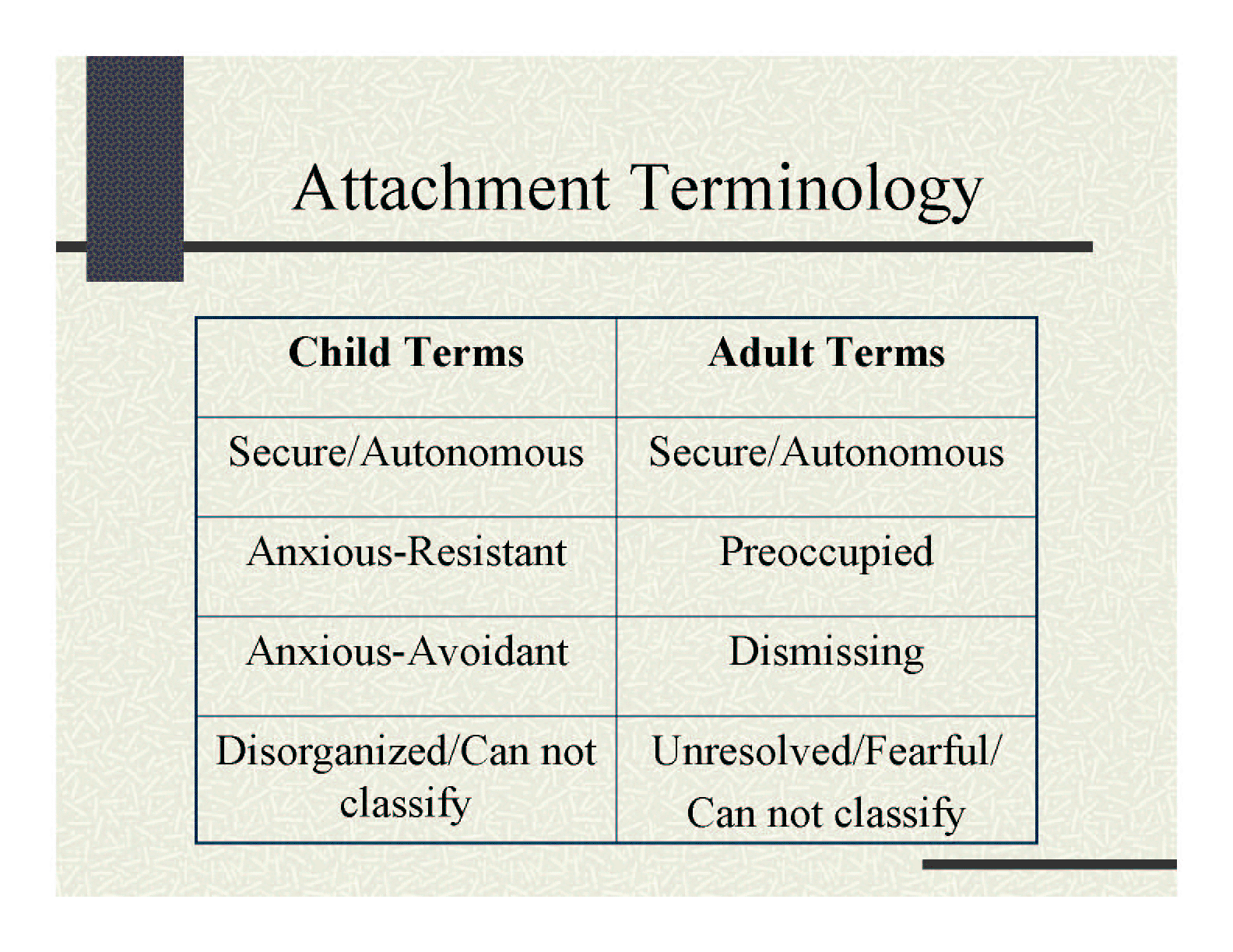

1505 Bridgeway, Suite 105 - Sausalito, California 94965 - (415) 332-6703
Copyright © 2014 Daniel Sonkin. All rights reserved. All photography by Daniel Sonkin.